VISI Die Tool Design
Complete Design and Manufacturing Solutions for Progressive Dies and Press Tools
GET MORE INFORMATON & A FREE TRIAL
Productive and Efficient Die Design
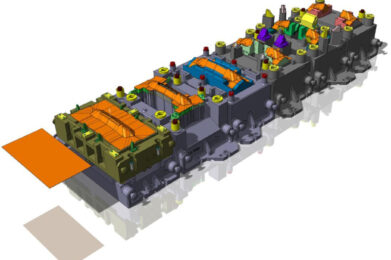
VISI Progress is a complete solution for the design and manufacture of progressive dies and press tools. Industry-specific functionality guides designers through intelligent, automation-driven decisions that reduce the potential for error and significantly improve manufacturing productivity — from initial part analysis through final tool assembly.
Features at a Glance
- Variable neutral fiber calculation
- Part analysis and bend study
- Automatic blank development
- Step-by-step unfolding
- 3D strip design and shearing simulation
- Bending and shearing stress calculations
- User-defined tool templates
- Parametric component libraries
- Automatic link to plate manufacture
- Associative tool detailing
- Automatic Bill of Materials creation
CAD and Modeling Tools
Broad CAD Compatibility
VISI works directly with Parasolid, IGES, CATIA, Creo, UG-NX, STEP, SolidWorks, Solid Edge, Inventor, ACIS, DXF, DWG, JT Open, STL, and VDA files. The extensive translator library ensures your team can work with data from virtually any supplier. Large, complex files are handled efficiently, and the ability to bypass corrupt records during import keeps even inconsistent data manageable.
True Hybrid Modeling
VISI provides a flexible environment where solid, surface, and wireframe geometry can be used freely — individually or in combination — without restrictions. Solid modeling covers Boolean operations including unite, subtract, extrude, revolve, sweep, cavity, intersect, and hollow. Surface modeling extends those capabilities with tools for more organic, free-form geometry, including ruled, lofted, drive, sweep, n-sided patch, drape, tangent, draft, revolved, and piped surfaces. Together, these tools make it straightforward to repair imported geometry or build the most complex 3D designs from scratch.
Unfolding and Layout
Powerful Unfolding Tools
VISI Progress can unfold both surface and solid models using a geometry-based unfolding algorithm. The developed blank is calculated using a Neutral Fiber model, with the option to choose from standard offset ratios or apply an automatic neutral axis formula. Step-by-step unfolding lets the designer plan each forming stage by dynamically adjusting bend angles, and parametric features like ribs and bosses can be activated or deactivated at each stage as needed. Flexible editing allows stages to be added or removed at any point, giving users complete freedom to experiment with the unfolding sequence.
Springback
When a sheet metal part leaves the die and forming forces are released, material elasticity causes the part geometry to spring back. The springback prediction tool uses the nominal part geometry, material data, and blank calculation to generate a compensated mesh of the product. The relative compensation tool applies a morphing to the original surface set, producing adjusted surfaces that account for springback and result in a more accurate final part. This capability reduces both the time spent moving from design to manufacture and the cost of the trial-and-error approach that has historically been required to solve this challenge.
When validating a part for formability, a graphical analysis mode divides the results into six zones that reflect conditions during the forming process:
- Strong wrinkle tendency — Slight stretch in one direction and compression in the other with material thickening. Wrinkles are very likely to occur.
- Wrinkling tendency — Stretch in one direction and compression in the other with slight material thickening. Wrinkles may occur.
- Low strain — Minimal stretch or compression in either the major or minor directions.
- Safe — Area below the forming limit curve where failure is not likely to occur.
- Marginal — Area between the safe and fail zones where the forming process is marginally safe.
- Fail — Area above the forming limit curve where splitting is likely to occur due to localized thinning.
Flexible Strip Layout
Starting from the developed blank, a 3D strip layout can be quickly formulated. Automatic blank alignment, rotation, and optimization tools help plan a more material-efficient strip. Punch design and layout benefit from the automatic 2D strip plan, including fold lines, and a range of automatic and semi-automatic tools assist in creating shearing punches that can be dynamically repositioned to different stages using drag and drop. Placing 3D folding stages into the strip is seamless, and the strip can be updated at any time to accommodate changes in the number of stages. Strip parameters including width and pitch are always accessible for modification. The 3D strip can be simulated at any point to verify the validity and performance of the design.
Material Economy and Force Calculations
Material utilization is automatically calculated by comparing the developed blank against the actual material consumed at each station within the tool. Critical force data is also generated, including shearing force, bending force, and stripping force — all computed directly from the 3D models and their material properties. These forces can be evaluated globally across the complete tool or locally for any individual station.
Tools and Punches
Tool Assembly
The tool assembly environment lets designers quickly build a solid-based layout of the required bolster plates along with all necessary pillar and bushing arrangements. Plate parameters are fully accessible, making modifications to the tool layout fast and efficient. The assembly captures all critical data needed for correct press tool operation, including press stroke, strip stroke, punch height, and tool stroke information. Each assembly can be saved as a tooling template, or an existing template from a library of common standards can be applied — automatically adapting the tool layout to match the dimensions of a new strip. Parts list data is captured within the assembly for use in downstream processes like 2D detailing and stock ordering.
Parametric Component Libraries
VISI Progress supports standard parts libraries from leading progressive die tooling suppliers, including Misumi, Futaba, AW Precision, Fibro, Strack, Danly, Rabourdin, Mandelli, Sideco, Intercom, Bordignon, Dadco, Dayton, Din, Kaller, Lamina, Lempco, MDL, Pedrotti Special Spring, Superior, Tipco, Uni, and Victoria. The parametric component library enables accurate placement of each standard component and ensures modifications can be made at any stage of the project. Every component includes a full set of editable parameters — including clearance hole creation — along with manufacturing data attributes and a complete parts list.
Non-Standard Punch Management
A fully automated approach to creating non-standard punches for trimming and forming operations keeps the design process efficient. Automatic punch extrusion ensures all clearances are correctly assigned throughout the tool assembly, and clearance parameters for each plate type can be managed using templates that apply to any punch at any time. Parameter-based creation of punch heels, support stems, and punch holders supports the rapid design and manufacture of custom punch shapes.
Tool Detailing
A complete set of 2D detailed drawings can be generated directly from the solid tool assembly, including fully editable 2D and isometric section views, automatic plate dimensioning, and hole type and position tables. Individual components can be detailed and displayed as a combination of 3D rendered and 2D views. Standard catalog components automatically display the correct detail representation within section views. Any change to the solid model updates the associated 2D views and fully associative dimensions automatically. Parts list items and balloon references are managed through dedicated assembly tools.
Manufacturing Modules
VISI's integrated environment means individual plates can go directly into manufacturing using feature recognition — drilled hole features and apertures are automatically assigned the correct drilling cycles and 2D milling routines. For more complex forms, VISI Machining generates conventional, high-speed, and 5-axis toolpaths. Complex punch apertures and their corresponding solid punches are manufactured seamlessly with direct integration to wire EDM. Keeping the complete project within a single product environment from design through machining ensures data consistency and a smoother overall workflow.