
VISI 2.5 Axis Toolpath
Reliable 2D Milling and Drilling Toolpaths from Wireframe and Solid Geometry
GET MORE INFORMATON & A FREE TRIAL
2 Axis Machining
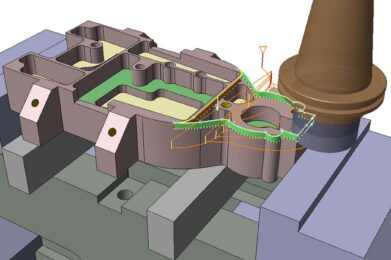
VISI Machining 2D delivers a practical, intuitive CNC programming solution that includes 4 and 5 axis indexing. Knowledge-based feature recognition automatically identifies features directly on the solid geometry and generates reliable milling and drilling cycle toolpaths — reducing programming time and keeping your code consistent and shop-floor ready.
Features at a Glance
- Extensive CAD interfaces
- Comprehensive tool library
- Pocketing, milling, and face milling operations
- Multi-level nested pockets
- Automatic residual stock
- Full range of drilling cycles
- Optimized toolpath movement
- Obstacle management
- Kinematic simulation
- Customizable post processors
- Reliable and efficient NC code
- HTML and XLS report output
CAD Interfaces
Extensive CAD Interfaces and Powerful Modeling
VISI works directly with Parasolid, IGES, CATIA, Creo, UG-NX, STEP, SolidWorks, Solid Edge, Inventor, ACIS, DXF, DWG, JT Open, STL, and VDA files. The broad translator library ensures your team can work with data from virtually any supplier, and complex customer CAD data can be handled efficiently without manual conversion. VISI works directly with wireframe, solid, surface, and mesh data — or any combination of the four — giving programmers the flexibility to work from any CAD model or construct the necessary geometry from paper drawings for 2D machining.
Machining
Simple Programming and Comprehensive Tool Management
The intuitive operation manager uses a clean tree structure to display machining operations alongside the selected tools from the comprehensive tool library. Many machining parameters — including feeds, speeds, stepover, and depth of cut — are calculated automatically based on part and tooling material. A highly graphical interface guides the programmer through cutting conditions and holder selection for each tool. Multiple origins allow data to be quickly oriented to any datum or configured for multi-axis indexing.
Full Range of Drilling Cycles
Center drilling, drilling, tapping, reaming, boring, helical milling, thread milling, and mill drill cycles give programmers a wide range of options for any hole type. Diameters and depths are selected directly from the model, making it easy to enter drilling parameters accurately and eliminate the risk of MDI errors. Toolpath movement is optimized to find the shortest travel distance between holes, reducing cycle times and maximizing productivity.
Profile and Face Machining Operations
Profiling operations offer a choice of machining direction — circular or direct approach — and the ability to cut down to depth using a sequence of profiling passes. Cutter radius compensation produces practical CNC code ready for use on the shop floor. When tight internal radii prevent full machining with the current tool, the system automatically creates residual stock geometry and enables re-machining with a smaller tool. Spiral or zigzag face milling operations with internal island nesting provide multiple options for cleaning up planar faces. Milling by successive passes allows the programmer to start away from the material and step inward using a defined stepover value.
Open and Closed Pocket Machining
Spiral and zigzag pocketing operations support multi-depth island nesting with the ability to define draft angles and base radii for pocket and island walls. Individual control over bottom and side tooling oversize, along with options for automatic island face milling, provides the flexibility to match any machining requirement. For open-sided pockets, the system identifies the open faces and automatically starts the cutter outside the feature, moving across the open edge to clear residual stock efficiently.
2.5 Axis Toolpaths for Simple 3D Forms
Extruding, revolving, or sweeping a 2D profile along a second 2D curve gives programmers the ability to generate simple 3D toolpaths without requiring a full 3D machining system or a complete 3D model. Internal and external thread milling, helicoidal milling, and fillet and chamfer machining for sharp edges add further flexibility to the toolpath options available.
Obstacle Management and Graphical Toolpath Verification
Clamps and fixtures can be identified within the setup so the system automatically routes around them using the shortest available path during machining operations. Obstacle management prevents collisions and reduces cycle time by eliminating unnecessary Z retracts. Graphical toolpath verification lets the programmer review the complete sequence of operations, with simulation showing the expected surface finish, the amount of material removed by each operation, and a warning of any potential collisions.
Post Processing
Configurable Post Processors and Setup Sheets
An extensive post processor library covers most machine tools, and every post processor is fully configurable to match individual requirements. Canned cycles for drilling, subroutines to reduce program length, circular interpolation, and cutter radius and tool length compensation all work together to produce reliable, shop-floor-ready CNC code. Configurable setup sheets are automatically generated as HTML or XLS files, including datum position, tooling information, cycle times, and the complete cutting envelope limits.